


India
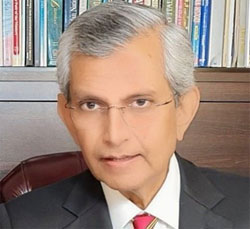
Pay Without Performance: The Reform Challenge Before India's 8th Pay CommissionBy Prajapati Trivedi
Over time, however, the debate has expanded beyond wages to include questions of bureaucratic efficiency, accountability, and performance within the public administration system. Yet, even as successive commissions have recommended large-scale revisions in salaries and allowances, a persistent structural flaw continues to haunt the system: financial entitlements have rarely been linked to measurable productivity commitments from the bureaucracy. This long-standing disconnect between compensation and performance has increasingly drawn attention as policymakers revisit reforms under the upcoming 8th CPC. Having served as an Economic Adviser to the Government of India (GOI) from 1990 to 1994 and later as Secretary in the Cabinet Secretariat responsible for Performance Management, I have witnessed firsthand how compensation architectures dictate organizational behavior. Granting universal wage hikes without linking them to performance defies fundamental organizational economics. It dilutes accountability and strips away the central catalyst required for sustainable institutional improvement and effective public service delivery. This is not a new realization. The paradigm shift was actually proposed decades ago by the 4th Central Pay Commission in 1986, which laid the groundwork for performance-linked rewards through "variable increments" to distinguish exceptional workers from average ones. The government accepted the broad framework but ultimately did not implement these innovative components, fearing that performance assessments might lead to allegations of bias. This has been the Achilles heel of all CPCs since the 4th CPC. Consequently, the rigid, seniority-based time-scale mechanism was retained. Subsequent commissions tried to revive this imperative. The 6th CPC delivered the most ambitious framework with the Performance Related Incentive Scheme (PRIS), designed as a budget-neutral "variable pay" component funded by departmental savings. Though accepted "in principle" in 2008, it was not implemented due to a diffident bureaucracy and the infamous "Savings Trap" that requires unspent funds to be returned to the Consolidated Fund of India, making it legally impossible to use savings to pay existing staff. The 7th CPC officially endorsed and reiterated the need to implement PRIS and yet it remains unimplemented. The developmental toll of this implementation paralysis is staggering. If the government had operationalized PRIS and yielded organizational savings of just 10% on relevant non-plan expenditure, it could have generated approximately Rs 11,000 crore annually. Over a 25-year period (1987–2012), this squandered opportunity amounted to roughly Rs 2,00,000 crore, equating to 7.71% of India’s total internal debt at the time. As I noted in a previous paper on this subject, this is a highly conservative estimate. With the 8th CPC’s Terms of Reference explicitly mandating a review of incentive schemes, there is renewed hope. However, to finally cure this systemic flaw, we need robust structural reforms. First, we must establish objective evaluation metrics for the whole department, requiring departments to achieve over 70% on a standardized Performance Agreement (like it was done under the Results-Framework Document — RFD) to qualify for incentives. Second, payouts must rely on strict, mathematical transparency to eliminate subjectivity. Third, eligibility must be predicated on modernization, such as adopting biometric access controls, implementing Citizen's Service Charters and effective Public Grievance Redress Mechanisms like CPGRAMS. All of these instruments have been implemented by the Government of India in the past and there is no need to reinvent the wheel. Finally, the Ministry of Finance must overhaul budgeting rules to bypass the "Savings Trap", allowing the scheme to be refined through pilot testing in select departments. Payment of incentives based on performance is a globally proven standard. The time for implementation is long overdue. @ Prajapati Trivedi is a Distinguished Professor, MDI, Gurgaon; Former Secretary and Former Economic Adviser to Government of India |
|
 NEW DELHI: As the Union government prepares to initiate deliberations on the 8th Central Pay Commission (CPC), the long-standing framework governing the salaries of central government employees is once again under scrutiny. Constituted roughly every decade since 1946, Pay Commissions have traditionally focused on revising pay structures and adjusting compensation to inflation.
India-US | India-France | Entertainment | Sports | Photo Gallery | Tourism | Link Partners | Contact Us
© Noyanika International, 2003-2024. All rights reserved.